
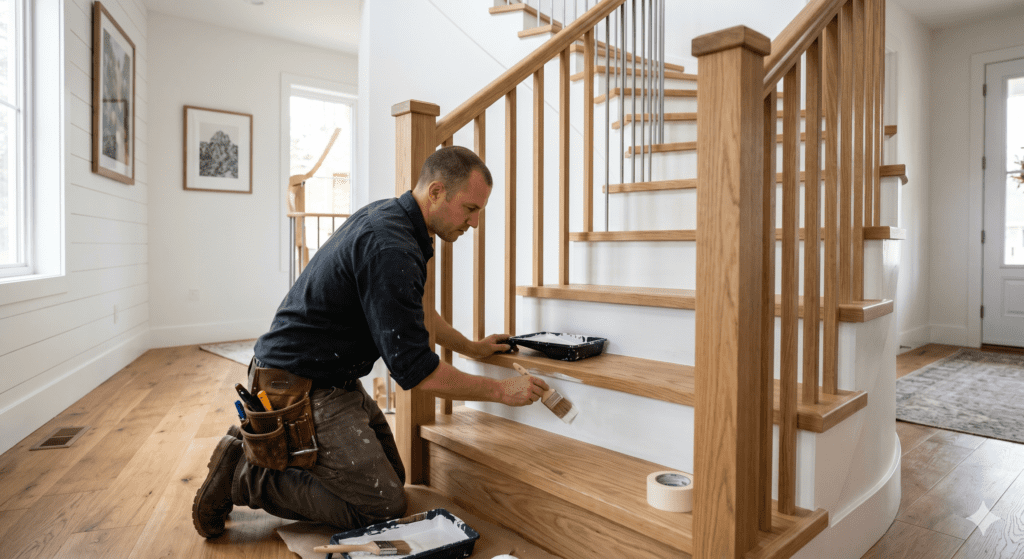
When I design a home, one of the key elements that require careful consideration is the staircase. Stairs are not only functional but also contribute to the overall aesthetic and flow of a space. Whether you’re building a new staircase or replacing an existing one, it’s important to understand the structural principles involved, as well as the design possibilities. I’m Oliver Preece, an architect with a focus on structural integrity and aesthetic maintenance, and in this guide, I’ll walk you through the process of building stairs that are both safe and stylish.
How to Build Stairs?
Let’s start with the basic but very important step.
Planning and Design
Before you start building stairs, you need a clear plan. This involves understanding the space available, calculating the dimensions, and choosing the style that complements your home’s design. Here are the key steps in planning and designing your staircase.
Determining the Staircase Location
The first step is deciding where the staircase will go. This involves assessing the available space and considering the flow of the home. Staircases should be easily accessible but not obstructive. Common locations include against a wall or in the center of a room to create a focal point.
Calculating the Staircase Dimensions
Accurate measurements are crucial when building stairs. The key dimensions to consider are:
- Total Rise: The vertical distance from the lower floor to the upper floor.
- Total Run: The horizontal distance the staircase will cover.
- Number of Steps: The total rise divided by the height of each step (riser).
- Riser Height and Tread Depth: Standard riser heights are typically between 7 and 8 inches, while tread depths range from 10 to 12 inches.
These measurements will determine the overall slope and comfort of the staircase. As an architect, I always aim for a comfortable ascent and descent, balancing safety and aesthetics.
Choosing the Staircase Style
Staircases come in various styles, from traditional to modern. Consider the architectural style of your home and your personal preferences. Here are some common styles to choose from:
- Straight Stairs: A simple, linear design that works well in most spaces.
- L-Shaped Stairs: A straight staircase with a 90-degree turn, ideal for corners.
- U-Shaped Stairs: A staircase that includes a 180-degree turn, often used in compact spaces.
- Spiral Stairs: A compact, circular design for tight spaces or as a design feature.
Each style has its unique benefits and challenges, so choose the one that best suits your space and aesthetic goals.
Building the Stairs
Once you’ve planned and designed your staircase, it’s time to start building. This process involves several key steps, from preparing the site to installing the treads and risers.
Step 1: Preparing the Site
Before you begin construction, ensure the site is clear of debris and properly measured. Use a chalk line to mark the staircase’s outline, including the location of the stringers (the support beams that hold the treads and risers).
Step 2: Building the Stringers
The stringers are the backbone of the staircase, supporting the treads and risers. To build the stringers:
- Choose the Right Material: Common choices are pressure-treated lumber or engineered wood, depending on the intended load and location.
- Measure and Cut the Stringers: Use a framing square to mark the riser height and tread depth on the lumber. The number of stringers required depends on the staircase’s width and load requirements.
- Install the Stringers: Attach the stringers to the support beams or the floor, ensuring they are level and secure. Use metal brackets or hangers for added stability.
Step 3: Installing the Treads and Risers
Once the stringers are in place, it’s time to install the treads and risers. Here’s how:
- Cut the Treads and Risers: Measure and cut the treads (horizontal) and risers (vertical) to fit the stringers. Use high-quality wood or composite materials for durability.
- Install the Risers: Attach the risers to the stringers using screws or nails. Make sure they are level and evenly spaced.
- Install the Treads: Attach the treads to the stringers, ensuring they are secure and evenly spaced. The treads should overhang the risers slightly for safety and aesthetics.
Step 4: Adding Handrails and Balusters
Handrails and balusters provide safety and support while adding to the staircase’s design. To install them:
- Choose the Handrail Style: Select a handrail that matches the staircase’s style and material. Common choices include wood, metal, or glass.
- Install the Handrails: Attach the handrails to the wall or stringers using brackets. Ensure they are at a comfortable height (usually 34 to 38 inches from the treads).
- Add the Balusters: Install the balusters (vertical posts) at regular intervals along the staircase. This adds stability and enhances the design.
Step 5: Finishing Touches
With the basic structure in place, it’s time for the finishing touches that make your staircase unique. Consider these steps:
- Sand and Finish the Treads and Risers: Sand the treads and risers to ensure a smooth finish. Apply a protective coating or paint to match the desired aesthetic.
- Add Decorative Elements: Consider adding decorative elements like trim, newel posts, or lighting to enhance the staircase’s design.
- Test for Stability and Safety: Before using the staircase, test its stability and safety. Ensure the treads and risers are secure, the handrails are sturdy, and there are no loose components.
Conclusion
Building stairs is a complex project that requires careful planning and precise execution. As an architect, I understand the importance of both structural integrity and aesthetic appeal. By following the steps outlined in this guide, you can build a staircase that is safe, durable, and visually striking. Remember, if you’re ever in doubt, consult with a professional contractor or structural engineer to ensure the staircase meets building codes and safety standards.
Staircases are a critical part of any home, and with the right approach, you can create a staircase that not only serves its functional purpose but also becomes a design feature in your home. Whether you prefer a classic or contemporary style, the key is to build with care and attention to detail.
What is the standard height for stair risers and depth for treads?
The standard height for stair risers is typically between 7 and 8 inches, while the standard depth for treads is between 10 and 12 inches. These measurements provide a comfortable and safe step size. The specific dimensions can vary depending on local building codes and regulations. When building stairs, it’s important to check your local codes to ensure compliance. If you’re unsure, consult with a professional architect or contractor to get the correct measurements for your staircase.
How do I ensure my staircase is safe and stable?
To ensure your staircase is safe and stable, follow these key steps:
Use Quality Materials: Choose durable and high-quality materials for the stringers, treads, and risers.
Secure the Stringers: Ensure the stringers are properly anchored to the support beams or the floor.
Install Handrails and Balusters: Handrails provide support, and balusters prevent falls. Ensure they are properly installed and at the correct height.
Test the Stairs: Before using the staircase, test its stability and safety. Check for any loose components or signs of instability.
Following these steps will help ensure your staircase is safe and stable for everyday use.
What styles of staircases are best for small spaces?
For small spaces, compact staircases are ideal. Here are some popular styles for limited space:
Spiral Stairs: These take up minimal floor space and can be visually striking.
L-Shaped Stairs: These use a 90-degree turn, making them suitable for corners.
Alternating Tread Stairs: These stairs have an alternating step pattern, allowing for steeper angles in compact spaces.
Disclaimer: This information is for general purposes only. Consult a professional for specific advice. See ourterms and conditions for details.